current workshops

Workshop #1

Beavers are Canada’s national animal, and they also provide important environmental contributions. How do these large rodents make such an impact on our landscape and environment, and why? In this workshop we are going to look at the upsides and the downsides of damming channels of water and the process of doing it. Using scale models with real running water, each participant will have a chance to experiment with hydro-engineering techniques and solve some of the issues our nation’s mascot does instinctively.

Cool Fact: Did you know that beavers have iron in their teeth?

Workshop #2

We will start with a read-aloud of a custom-written children’s book about the engineering feat that is our region’s UNESCO world heritage site. After grounding ourselves in the fact that the canal was built in just 6 years across 3 watersheds, over 202 kilometres of rock and swamp, all with no modern equipment, we will experiment with why the system still works in the same fashion today, exactly 200 years later.

Using a model of a set of typical Rideau canal locks, participants are going to discover for themselves how the water must be manipulated to get boats up and down what is essentially a staircase for boats.

Oh, and everyone will make their own boat to take home.

Workshop #3

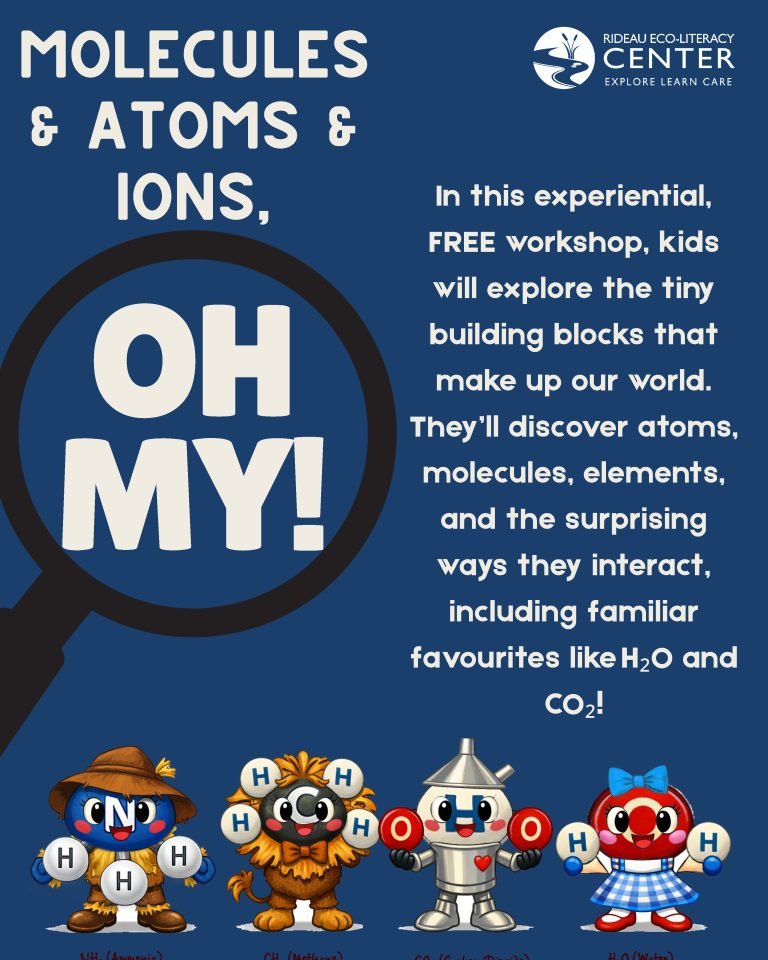
Today, we’re breaking matter down into its tiniest pieces with our small humans. We will start with atoms, the building blocks that make up everything around us. Next comes molecules and the surprising ways atoms connect with each other. Expect to spot a few familiar favourites along the way, including H2O and CO2. The elemental table will swing by as we learn about what occurs naturally in nature, what is man made, and we will dip into the idea of acid and alkaline substances. There will be lots of fun hands-on mini experiments to see proof of the existence of these invisible factors at work with each other.

Workshop #4

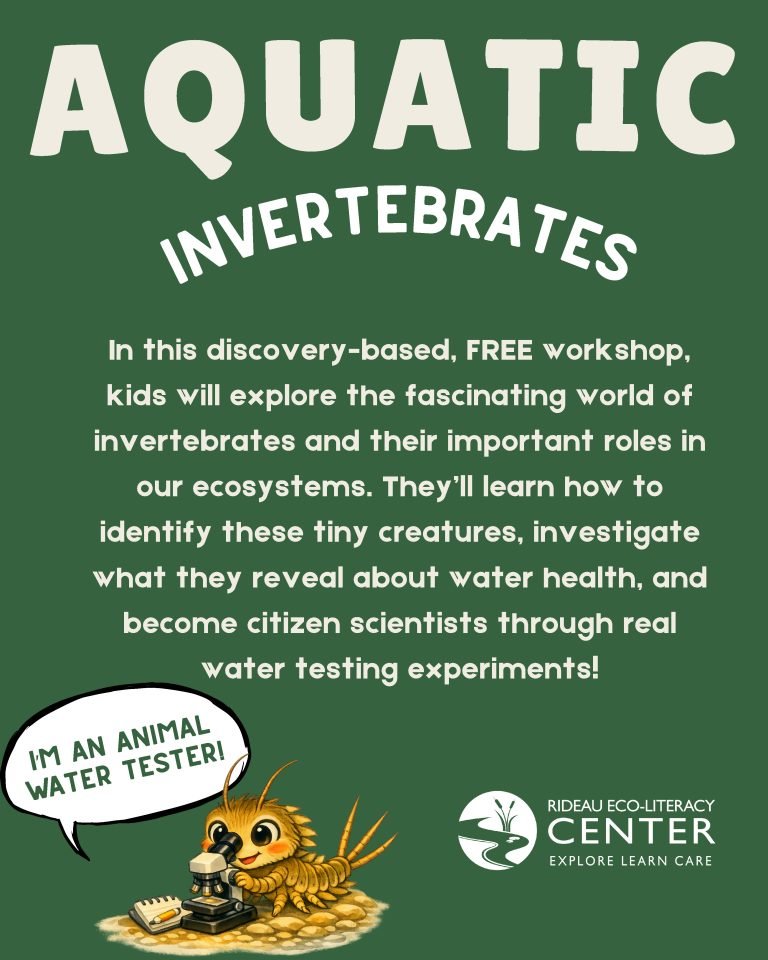
Did you know that invertebrates make up 97% of the creatures in the world? Just like molecules, they can be simple and tiny or large and complicated. In our lakes, rivers, ponds, and wetlands, they perform very important jobs.

Being able to identify them can tell you lots of things about the water they live in. Using some of our elemental learning from last week, we are going to do some citizen science and test the water to confirm our hypotheses.

Scroll to Top